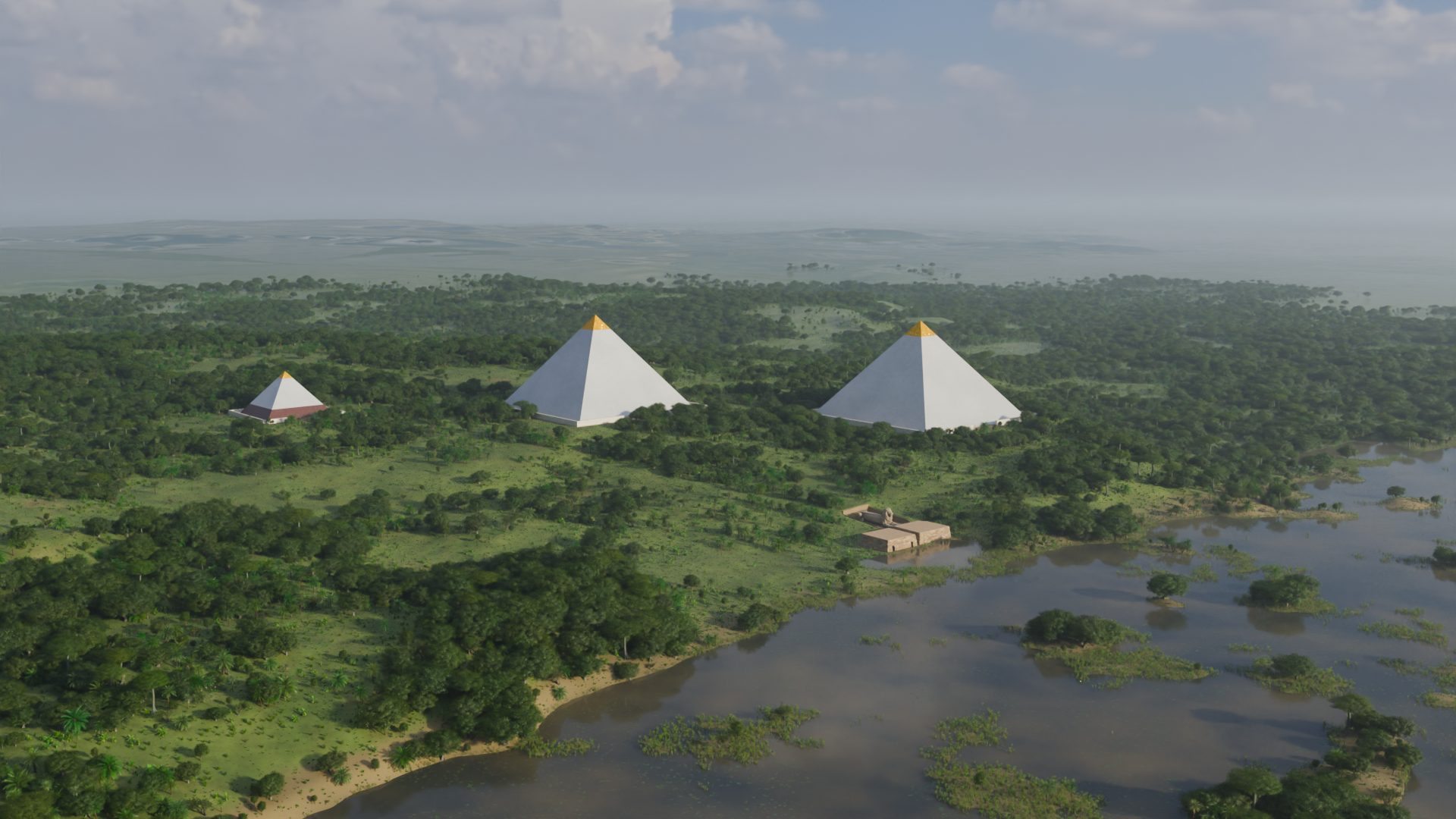
The guided tour
The case for an older Giza, in ten stops across the plateau: the argument of West, Schoch, Bauval and Hancock that the plateau is far older than the record, put at its strongest, with the project's own measurements beside each step. About eight minutes; each stop moves the view and runs the eras for you.
- 1The case for an older GizaThe plateau runs back from today to 10,500 BCE, and the case is set out.
- 2Weathered by rainSchoch's geology: the Sphinx worn by rain, not wind.
- 3Megaliths from the Sphinx's own quarryHundred-tonne blocks from the Sphinx's ditch, faced later in granite.
- 4The lion faces the lionA head too small, and a lion facing the dawn of the Age of Leo.
- 5The sun in the horizon signThe midsummer sun sets between two pyramids: the horizon hieroglyph.
- 6Orion's belt on the groundBauval's correlation, with the belt at its lowest in 10,450 BCE.
- 7Shafts aimed at the starsFour shafts, four stars, and a monument to an older moment.
- 8The chamber under the rockAn unfinished chamber in the bedrock, and a passage aimed at the pole star.
- 9The shape of the EarthTrue north, pi, phi and the 1:43,200 scale of the Earth.
- 10A lost chapterThe Younger Dryas, Göbekli Tepe and a lost chapter of history.
Five eras, one plateau
The same stand, the same survey numbers, five moments. Today is the survey and Giza as built the conventional reconstruction. The two oldest eras follow Hancock, Bauval and Schoch's case that the plateau is far older than 2500 BCE, from the water-worn Sphinx enclosure to Orion's belt in 10,500 BCE, and draw it at its strongest.
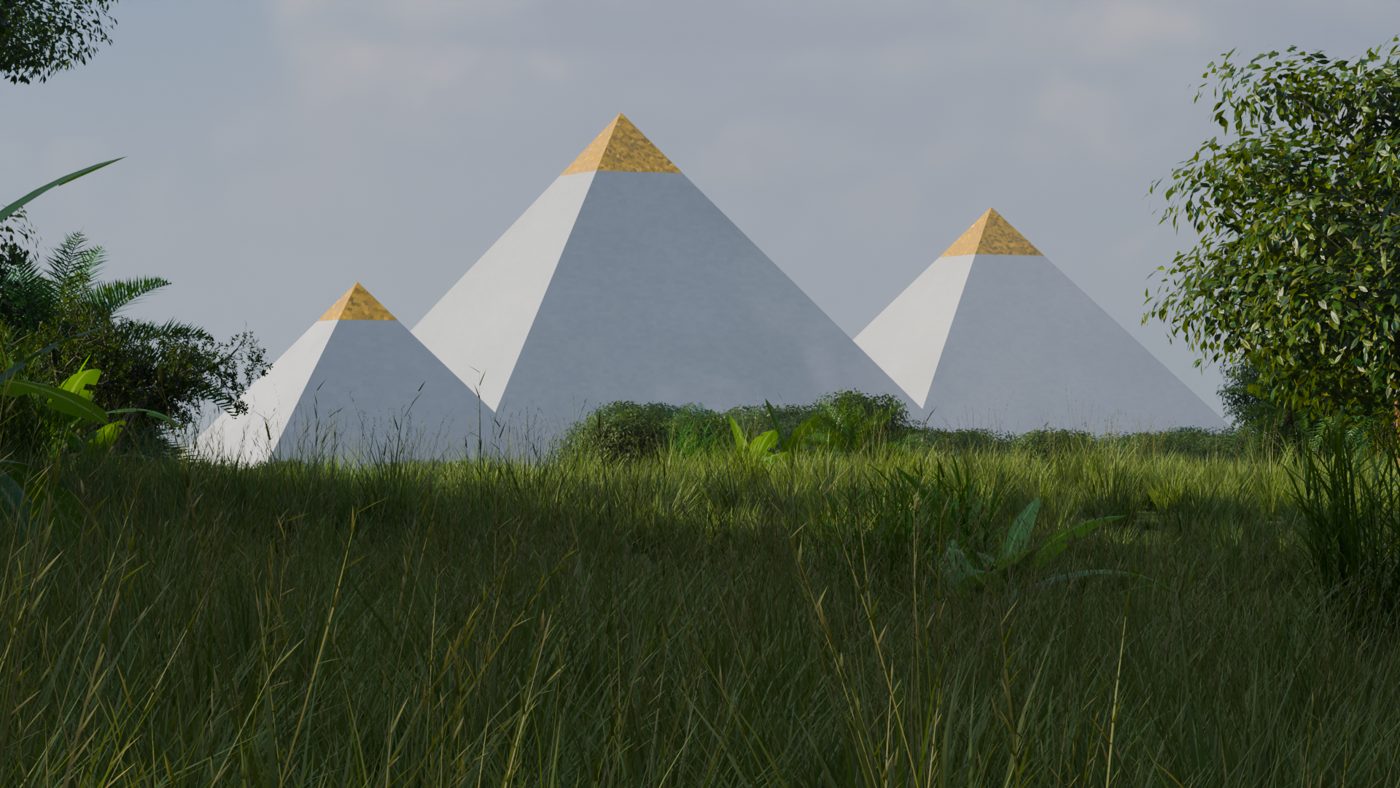
The First Time
c. 10,500 BCE. Polished casing and gold caps in a green Sahara, as the lost-civilisation reading has it.
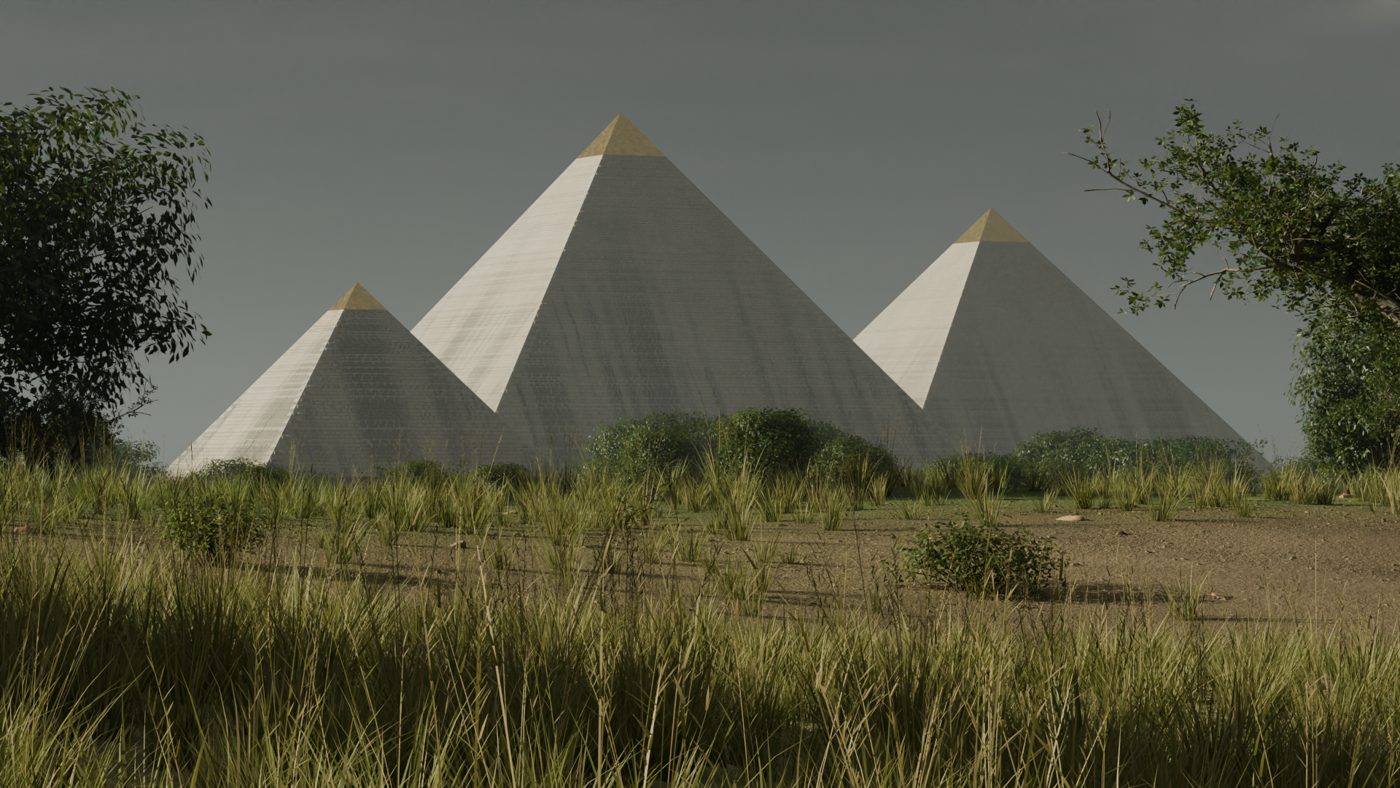
The long rains
c. 7000 BCE. The Sphinx enclosure worn by rain, Schoch's case for an older Sphinx.
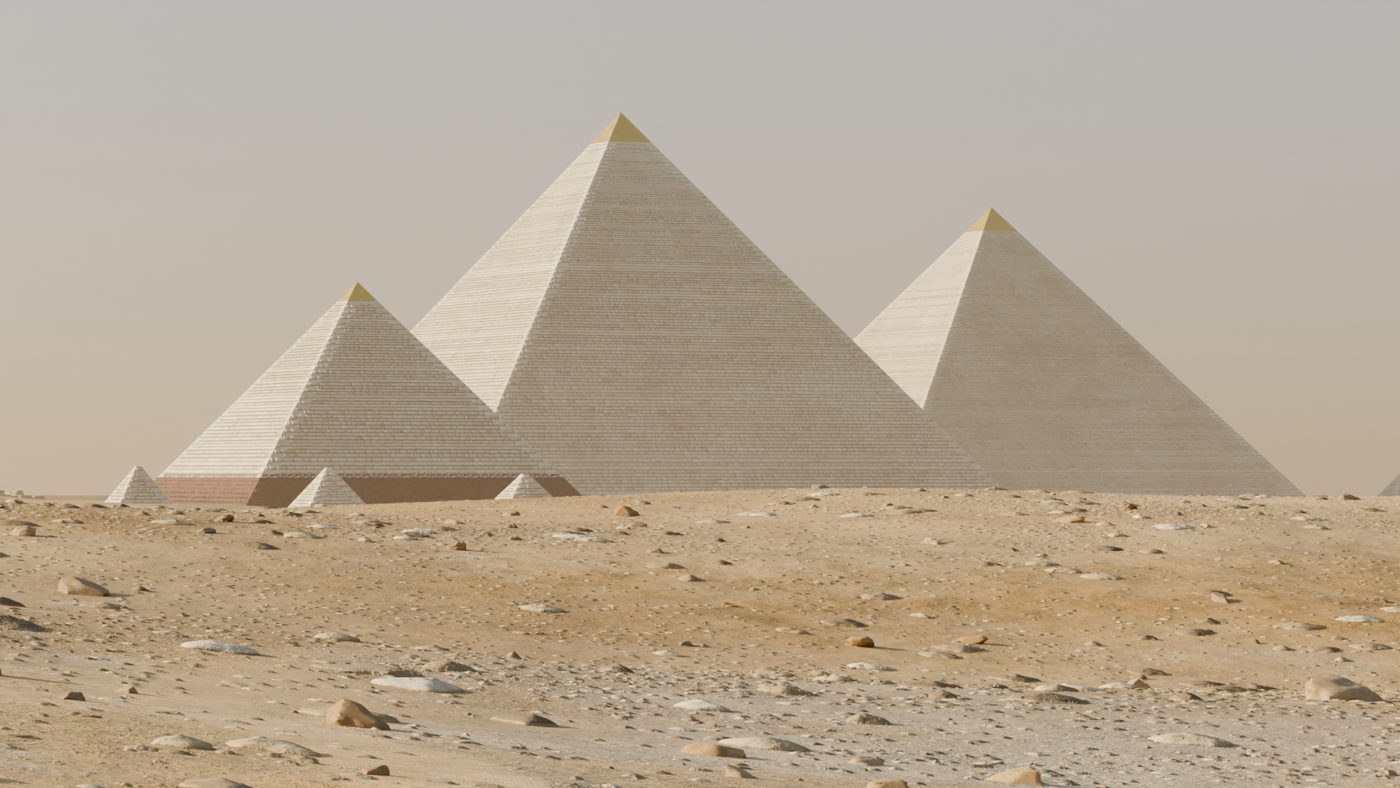
Giza as built
c. 2500 BCE. The plateau as its Fourth Dynasty builders finished it, cased and capped, temples and causeways standing.
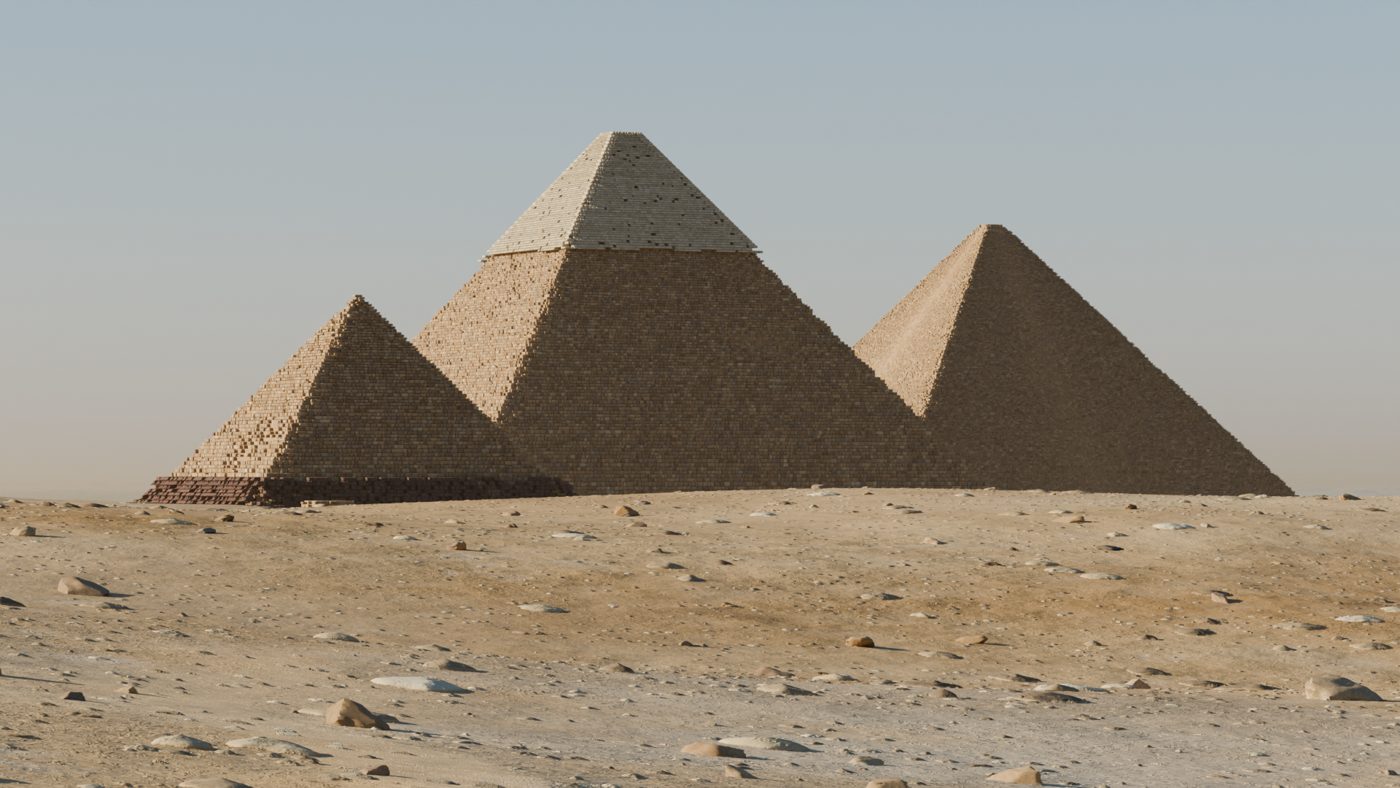
Stripped and buried
c. 1800 CE. The casing quarried away for Cairo, the Sphinx in sand to the chest.
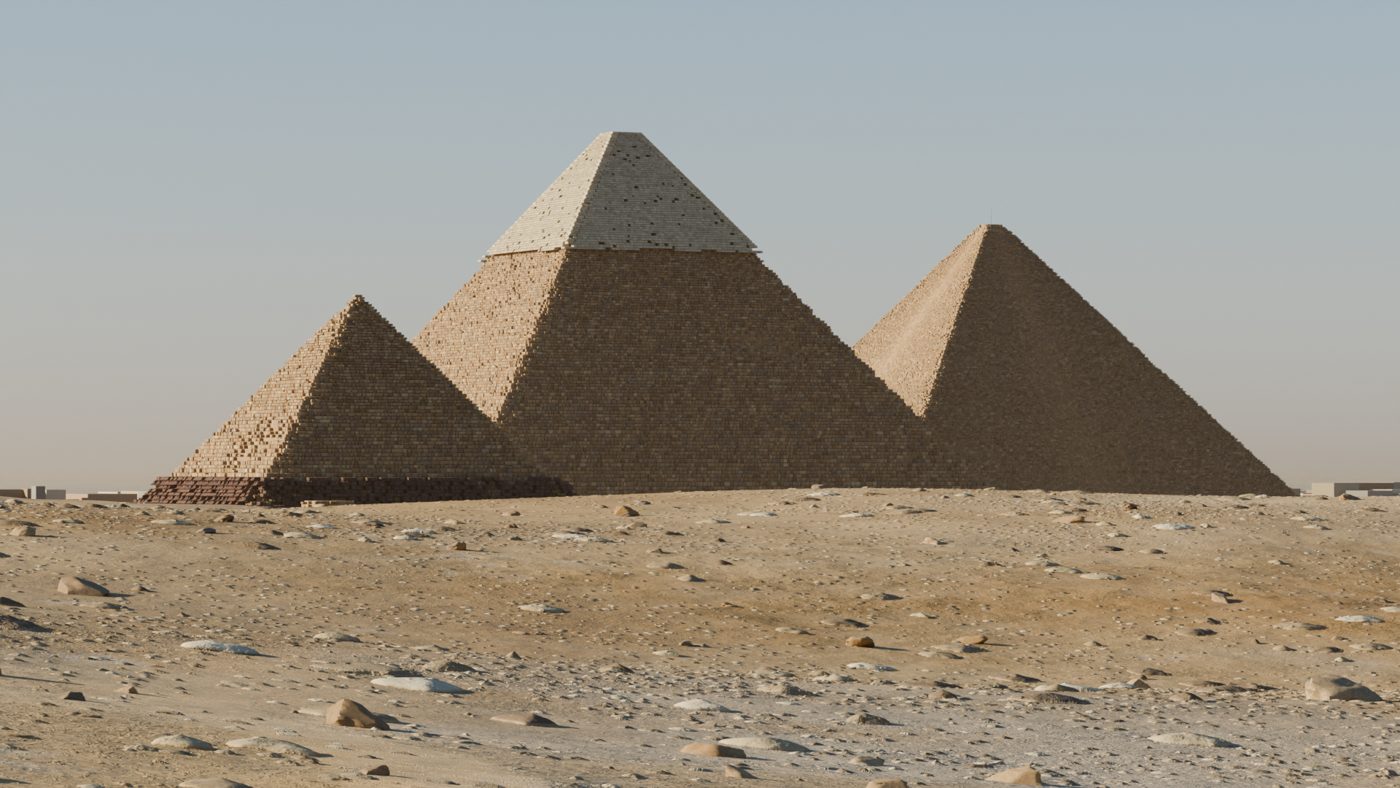
Today
2026. The plateau as measured, with the modern city behind it from Open Buildings.
Explore
The walkthrough
Seventeen 360-degree stations, from the desert approach to the King's Chamber, each in every era it stands in. Take the guided tour, or drag to look, switch the era and step to the next station on your own.
Walk the plateau →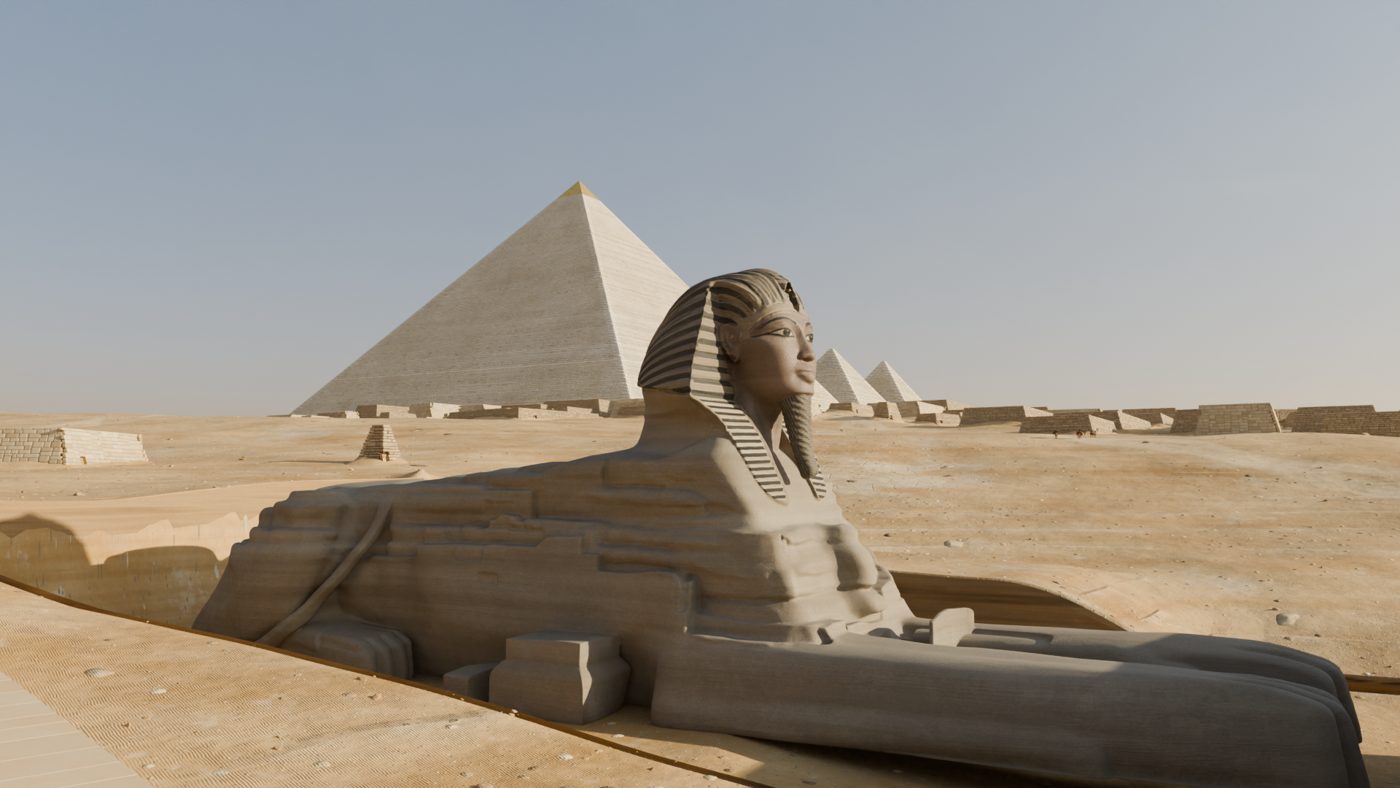
The films
The rollback from today to the First Time, the Sphinx's sequence from lion to excavation, and a flight up the approach as built.
Watch →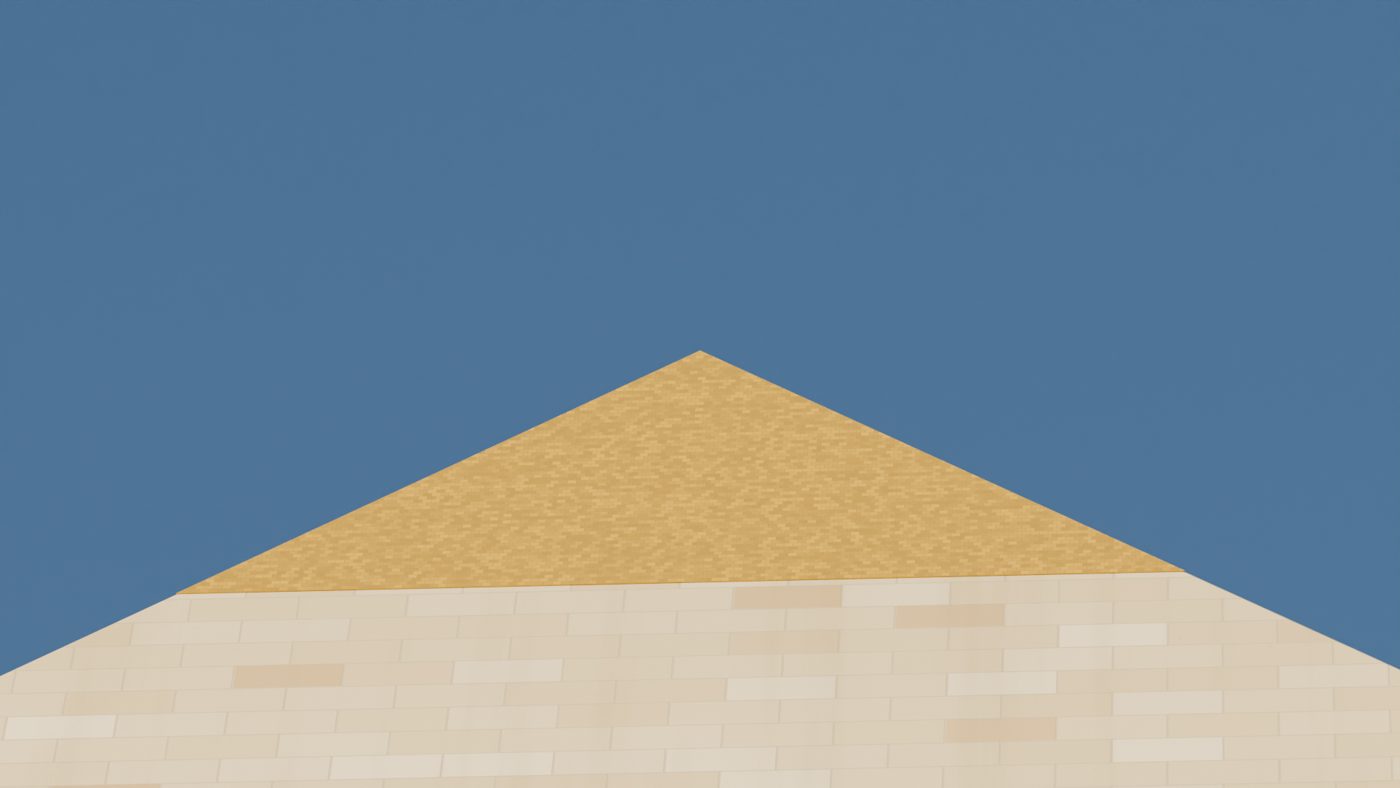
The sky alignments
Orion over the three pyramids, the lion facing Leo, the shafts reaching for their stars, each with its stars precessed by the sky engine and the size of its miss stated.
See the sky →What keeps it honest
- Claims tested
- 22
- Within their own tolerance
- 14
- Walkthrough stations
- 17
- Eras
- 5
- Nothing is typed twice.Every number lives once in the measurement database with a cited source. Perimeters, apothems and volumes are computed, never stored, so they cannot drift.
- Claims are data.A claim is its inputs, formulas, target, tolerance and the free choices it needs. Switch the source preset and every result recomputes.
- The sky is computed.Star positions come from the HYG 4.2 catalogue, carried back with Vondrák 2011 precession and pinned in tests to ERFA's values.
- Pyramids from the survey.The three pyramids follow Petrie and later surveys as closely as the sources allow; they are what the claims are about.
- Stand-ins are labelled.Temples, tombs and the Sphinx are placed on their surveyed footprints to about a metre; their forms are visual stand-ins and say so.
- Tiers are never promoted.Each structure is excavated, instrumented, claimed or legendary, and no claim moves one up a tier because it needs it.